My husband joined a club.
He thought it would be a good way to make friends with people who shared his interests. He attended the meetings and volunteered to help with an event, but never felt welcome. No one seemed interested in talking with him or even finding out who he was. He persevered and kept going for a while. He thought that he needed to try harder to connect with people. It didn’t change.
Eventually he stopped going.
Nobody told him he wasn’t welcome. But nobody had really made him feel welcome either.
I have seen the scenario play out in many places and even wonder how often I may have contributed to it in the past.
At the time, I was involved in another group. Whenever someone new reached out to the organiser, she invited them for coffee. She wanted them to feel welcomed into the group. Then, when they came along, they felt welcomed and were quickly a part of the conversations. Everyone who came felt they could find friends here.
While the group was not for everyone who tried it out, it was a place where friendships blossomed, and people felt supported.
We don’t set out to not welcome people. A group or organisation can make all sorts of attempts and even policies to say we welcome everyone, or at least new members. They can be the most beautiful, kind and well-meaning people who genuinely believe they are welcoming.
Yet the experience is often different. We create our friendship groups within the organisation. This is natural, and it is what we want and need to have.
However, do we make room for others?
I have experienced this myself. I’m part of organisations where I don’t have a particularly close-knit group of friends. I often feel on the edge. Does anyone notice? I don’t think so. Maybe they just think I am shy; a loner?
Sometimes breaking through these barriers takes a real sledgehammer. It’s not easy. Not all of us are good at starting conversations. For someone who is introverted or neurodivergent, finding those first words can be particularly difficult. Approaching a group already deep in conversation can feel like an intrusion. You wonder, “Am I interrupting? Will I be welcome?”
My experience is more that I’m not on the outer edge. I’m somewhere in the middle. I have learnt how to start a conversation and be curious about others. My work with Chocolate and Coffee Break and as a Community Chaplain has helped me enormously.
When I don’t feel particularly welcome, I look for those right on the edge. They want to be there. They want to experience what we all do: that we’re part of a community. Yet there they sit alone.
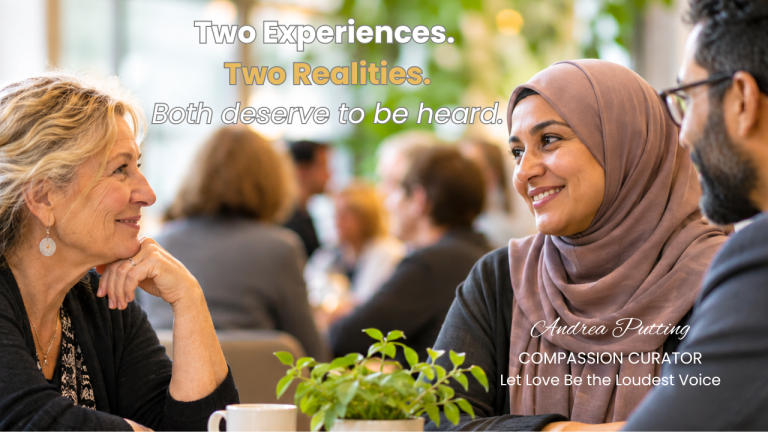
These are the people I make time for. I go and sit with them and make them feel welcome. Because sometimes all it takes is someone to make the effort to start a conversation, show genuine interest, and make the other person feel they matter.
You don’t have to be a leader to create belonging. Each of us can make someone feel welcome, included, and valued.
What if, instead of entering a room wondering who will make us feel welcome, we entered wondering who we could make feel welcome?
Brew the Change: Bring Someone In
The next time you’re at a gathering, meeting or community event, look for someone who isn’t part of the conversation.
Go over, introduce yourself and start a genuine conversation. Find out something about them. If appropriate, introduce them to someone else and help bring them into the group.
Don’t just say hello and walk away. Help them feel included.
That small, practical action could make an enormous difference to someone’s experience.
Belonging isn’t just something we hope to find. It’s something we can create for someone else.