“Do you identify as Aboriginal or Torres Strait Islander?”
It is a question that we are frequently asked on forms in Australia. I almost giggle to myself when someone asks me that question in person. I look every bit the result of my Estonian, German and Anglo heritage.
Yet there are many people in our communities who identify as Aboriginal who don’t necessarily fit the image we have in our minds of what an Aboriginal person should look like. I have heard people scoff when someone with a fair complexion says they are a proud Aboriginal person. Yet how is their pride in their heritage any different from mine as an Estonian, or someone else’s pride in being Italian or Chinese?
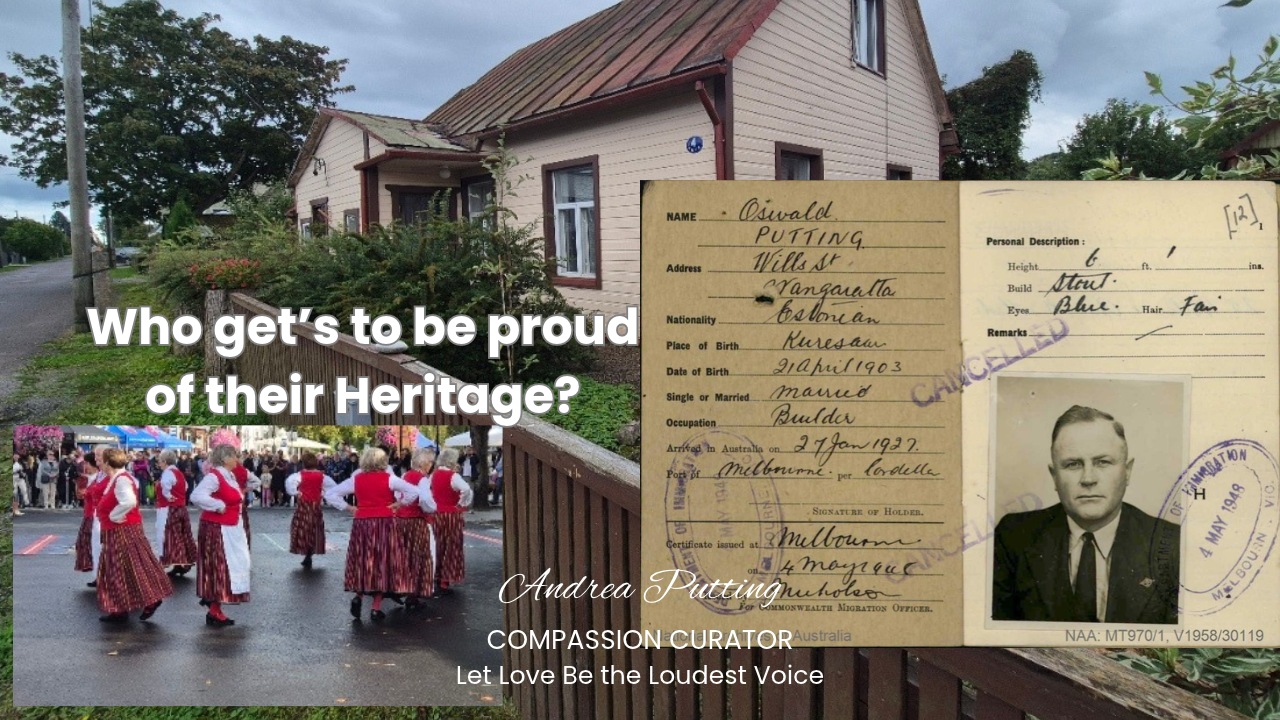
My grandfather was born on a small farm, on a small island off the coast of a small country that few people around me had ever heard of when I was growing up. Yet we held on to the knowledge that he came from a country whose spirit beat on despite being engulfed by the Soviet Union. It wasn’t until after he died that Estonia reclaimed its independence, giving us the freedom to explore our heritage.
Even though I am only a quarter Estonian by ancestry, I have the right to call myself Estonian. Through descent, that connection to Estonia extends to my children and even my grandchildren. They may be only one-eighth or one-sixteenth Estonian, but that does not diminish their heritage. We are proud of it.
So why do we question Aboriginal and Torres Strait Islander people when they express pride in their heritage?
I recently read Stan Grant’s book, Talking to My Country, which gave me some new insights into the history and experiences of Aboriginal people since the British invasion of Australia.
We have all heard of the Stolen Generations. Children were forcibly taken from their families to be raised according to white Australia’s expectations. Behind some of these policies was a deliberate intention to breed Aboriginality out of successive generations. The thinking was that, through having children with white people, Aboriginal identity would eventually disappear. Connections to family, heritage, culture and a beautifully rich history would be lost.
This gave me a new understanding of the significance of Aboriginal people standing proudly in their identity, regardless of their physical appearance or the proportion of their ancestry.
When we question someone’s Aboriginality because their skin is too fair, are we not perpetuating the very thinking that once sought to erase their identity?
Reading about this history and the experiences of Aboriginal people touched my heart and opened my eyes to a truth I hadn’t fully appreciated. It is a history we should never forget and certainly never repeat.
When Aboriginal and Torres Strait Islander people stand proudly in their heritage, I see something worth celebrating. Against generations of attempts to erase their identity, their cultures endure.
Who are we to question something that others fought so hard to preserve?