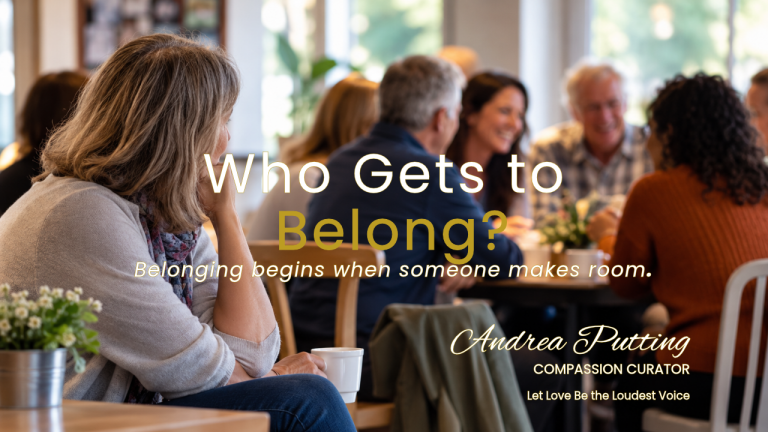
How much of a person do we really see?
We make assumptions about others. We see them walking down the street, at work, or in social settings. We think we know them, or maybe we don’t want to know them. But what is their life beyond what you see? How have their experiences altered how they show up in the world?
Through Chocolate and Coffee Break, I’ve had the privilege of people sharing their stories with me. Stories that are deeply personal, sometimes carried for years without being spoken about. Often, we simply don’t think to ask.
When Meybell shared her story of growing up in a warzone, her life was far from what we might consider a normal childhood. Her parents had to hide her to keep her safe. She couldn’t go outside and play. Talking to anyone in the street was definitely a no-no. When she arrived in Australia, she settled into the way of life. Her parents, however, remained wary of others. It’s one thing to adopt a new country; it’s another to change a lifetime of fear.
To a stranger, Meybell’s parents may seem aloof, or that they don’t want to join in. But when you’ve spent years learning to be careful about whom you trust, how easily can you leave that behind?
Elee grew up going back and forth from her birthplace in Guam and her grandparents in the Philippines. As an adult, she moved to the US and discovered a whole different culture. In Guam, she knew her neighbours, her family lived close together, and she rarely needed to say “please” and “thank you” for everyday acts of kindness. No validation was required. Family and friends do things for each other. There is no need for formalities.
In the United States, Elee discovered that saying “please” and “thank you” was expected in everyday interactions. Something she had grown up understanding as a natural part of caring for family and friends could now be interpreted as rude or ungrateful. She hadn’t changed how she felt about others, but the expectations for how she should express those feelings were different.
They may not understand our customs, just as we don’t understand theirs.
It’s easy to make assumptions about people when we take them at face value. We can misinterpret so much more than language. Different customs, a lifetime spent surviving, a secret or fear carried for years can all influence how someone moves through the world. But others don’t know that. They just see what they see.
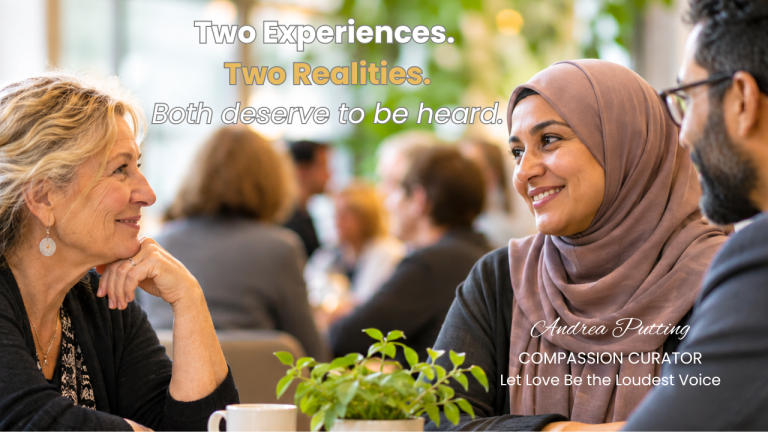
Everyone has different experiences and loads that they carry. They shape us and can define us. We can’t know someone’s story when we first meet them, and sometimes it takes years to understand. Giving people space and adopting curiosity can help. However, first we need to carry a different kind of assumption.
The assumption that there is a person, just like me. They have lived experiences different from mine. I can’t know what they are until I ask, or they are willing to share. Meanwhile, I can treat them with the same dignity, respect and understanding I would hope to receive myself.
Let Love Be the Loudest Voice
The stories shared here come from conversations with Meybell Crista and Elee Joven on Chocolate and Coffee Break: A Compassionate Proposition.
You can watch Meybell’s episode here and Elee’s here. Explore more conversations on our YouTube channel.